How to Specify Interior Pockets for a Custom Tote Bag
Define tote bag pockets around the items they hold, the access you need, and the loaded sample checks that confirm the layout.
Updated September 25, 2026 | 4 min read | Published by Oksaur Outdoor
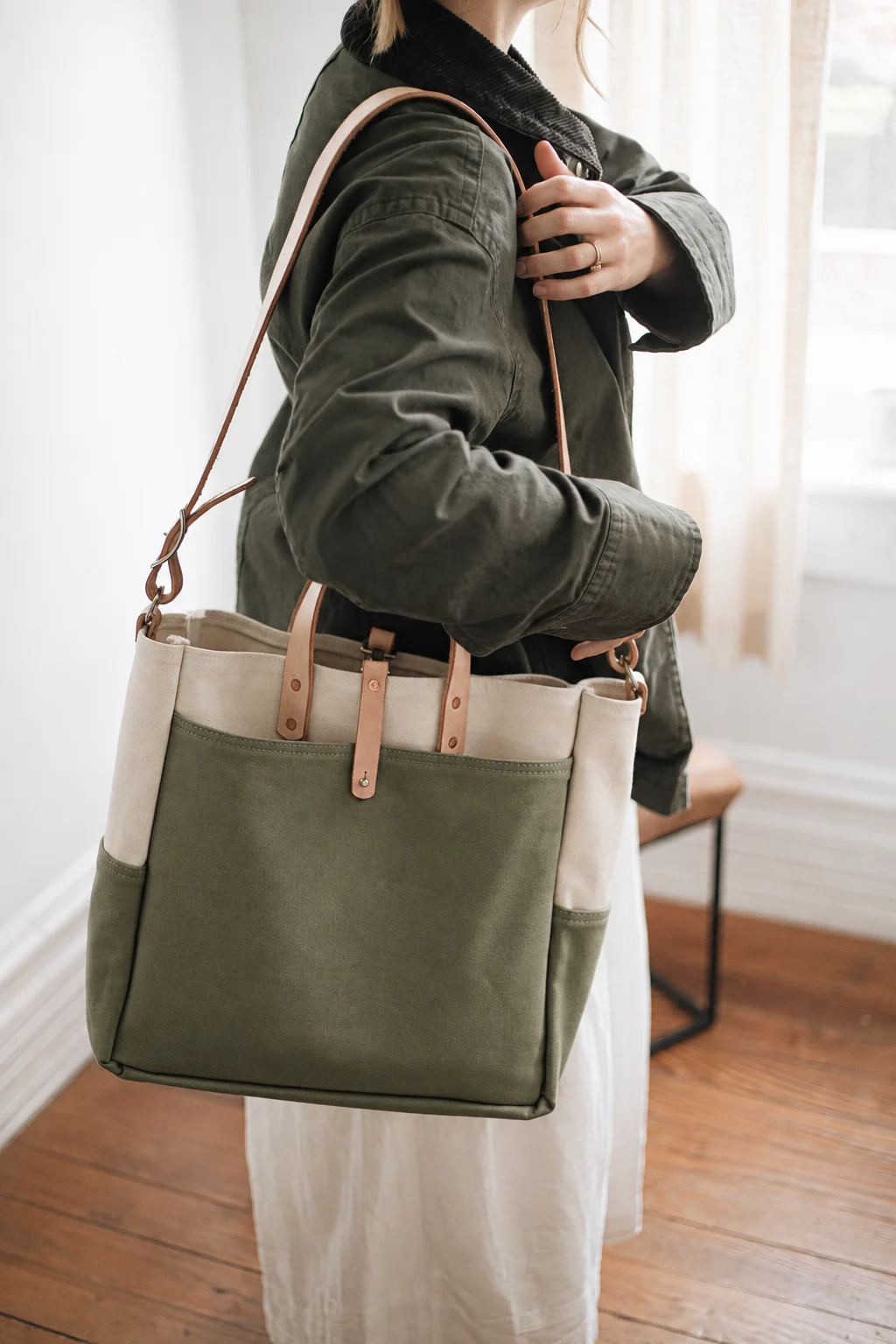
Start with the items each pocket must hold
List the items that need a separate place before choosing pocket shapes or sizes. The structured tote listing names a tablet, notebook, phone, wallet, and daily essentials for the main compartment. Use that list to decide which item needs a closed pocket and which item needs a faster-access slip pocket. A pocket brief is easier to review when every opening has a job.
Choose the pocket type by access need
An inner zip pocket can keep smaller items enclosed, while a slip pocket can keep an item visible and quick to reach. State the pocket type beside the item it is meant to hold. This avoids a vague request for an organizer interior and gives the sample reviewer a clear point of comparison.
Set the finished size and position
Record the finished width, height, opening direction, and position for each pocket. Note the distance from the side seam, base, or top edge so the layout can be checked on the sewn sample. These are construction details, so confirm them with the sample rather than estimating them from the outside dimensions.
Use the structured tote as a starting point
The structured zip-top tote is listed at 41 × 29 × 12 cm and uses water-resistant woven fabric with a soft lining. Its listed features include an inner zip pocket, slip pockets, and shoulder or hand carry. Treat those details as the starting construction, then record any requested pocket size or placement change in the quotation and sample notes.
Check the pockets with a loaded tote
Put the tablet, notebook, phone, wallet, and other daily essentials named for the tote into the sample. Open the zip pocket and slip pockets while the bag is held by hand and carried on the shoulder. Check that the pocket openings remain usable and that the packed contents do not press against the lining or pull the pocket out of position.
Keep the approved layout in one brief
Record each pocket's purpose, finished size, opening, placement, closure, lining, and fabric in the final specification. Add a photo of the approved sample and note every change made after testing. Keeping the written layout with the sample reference gives production one clear pocket standard to follow.
Discuss a custom tote pocket layout
Send the model number, quantity, artwork, destination, and required date. We will reply with the remaining questions needed for pricing and sampling.